
Office Cleanouts Portland–Vancouver: Desks, Cubicles, Storage
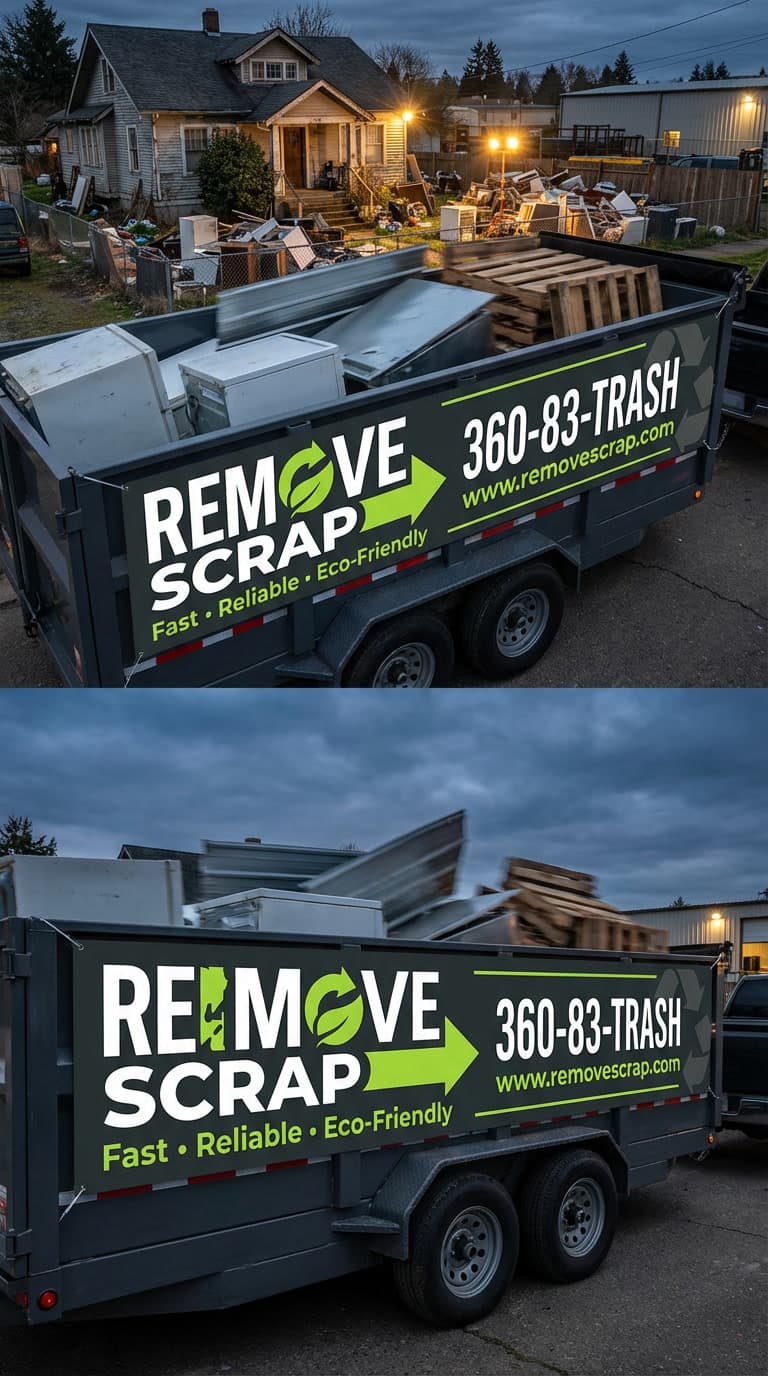
Commercial cleanouts have a different rhythm than houses: more metal, more repetition (forty identical chairs), stricter timing (lease-end dates don't move), and a landlord watching the condition of the space. Whether you're downsizing a Vancouver office, closing a Portland location, or finally emptying the business storage unit that's quietly cost more than its contents, here's how it works.
The Lease-End Reality
Commercial leases typically require the space back in broom-clean condition by a hard date, with holdover penalties that dwarf any cleanout cost. So the sequence runs backward from key-return day: removal in the final week, sale/donation the weeks before, and inventory decisions before that. The most expensive commercial cleanouts we see are the ones that started the week they were due.
What Office Loads Are Made Of (Good News Inside)
Office furniture is metal-framed almost by definition — desks, file cabinets, shelving, cubicle frames, chair bases. That's weight we scrap at the yard, and it's priced into commercial jobs the same way as everything else we do: metal-heavy loads cost you less. Filing cabinets, in particular, are nearly pure steel; a wall of them is a discount, not a burden.
The honest resale note: used office furniture has a brutal market. Liquidators want volume and recent-vintage matching sets; one-off desks and chairs from 2012 mostly don't sell. Give your team first pick, list the genuinely good pieces, donate what nonprofits will take (call ahead — many decline cubicles outright), and haul the remainder without sentiment.
The Data & Documents Layer
Two commercial-specific streams before the trailer:
- Electronics: computers, monitors, printers route to e-cycle programs (landfill-banned in both states). Drives with business data should be wiped or physically destroyed under your own policy first — we haul hardware, we're not your data-destruction chain of custody, and any hauler who shrugs at that question is a liability.
- Records: boxes of old files are shred-service work if they contain client/employee data, hauling work if they're truly junk mail vintage. Sort those streams before removal day; it's a one-hour task that prevents a compliance headache.
Pricing Shape for Commercial Work
- Small office refresh (a few desks, chairs, misc): $175–$300
- Full small-office closure (10–20 workstations): typically 1–3 trailer loads, $300–$900
- Storage unit cleanouts: the sleeper category — most units clear in a partial-to-full load, $175–$300, and the monthly rent you stop paying makes it the fastest-payback cleanout in this entire industry
- After-hours and weekend work: available, and often smarter for occupied buildings — ask
Every commercial job gets an itemized invoice and disposal receipts on request; bookkeepers appreciate paper, and so do landlords verifying the space cleared legitimately.
FAQ
How much does an office cleanout cost?
Small refreshes $175–$300; full small-office closures $300–$900 in the Portland–Vancouver metro. Metal furniture (desks, file cabinets, shelving) carries scrap value that lowers the total.
Do you take cubicles and office furniture?
Yes — including teardown of cubicle systems. Donation-grade pieces route to nonprofits when they'll accept them; the metal-framed remainder scraps favorably.
What about computers and old files?
Electronics go to e-cycle (landfill-banned in OR and WA); data-bearing drives should be wiped or destroyed under your policy first. Files with sensitive data are shred-service work before we haul the boxes.
Lease clock ticking or storage unit bleeding rent? Photo-quote your space at removescrap.com — receipts included, landlord-ready finish.
Need Junk Removed?
Same-day service in Portland & Vancouver metro. Free quotes, no obligation.
Call (360) 83-TRASH