
Why Scrap Metal Prices Change — And Your Cleanout Bill
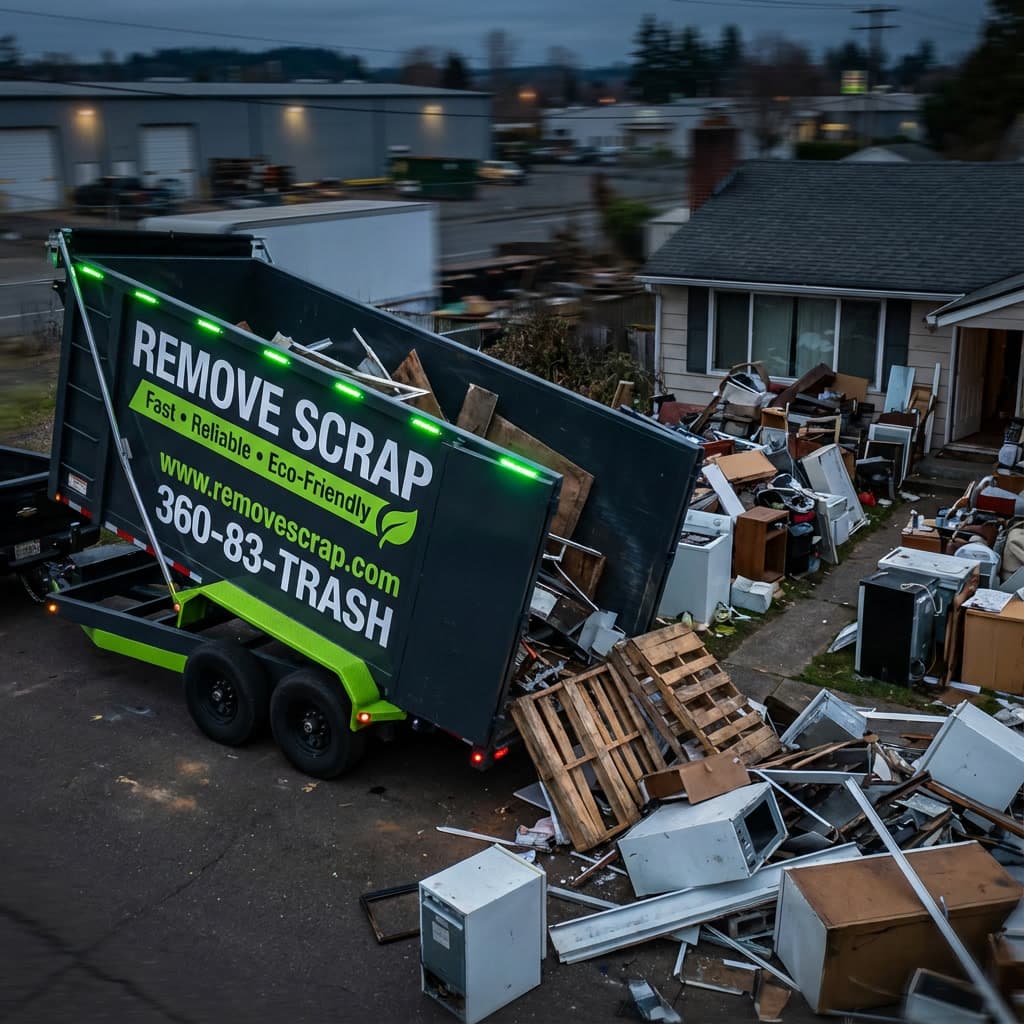
We've built this whole business on a simple honesty: the metal in your junk has value, we recover it at the yard, and your price reflects it. Which invites the natural follow-up customers ask at the trailer: why was steel nine cents a pound this summer, and what makes that number move? Here's the plain-English version, from the company whose weigh tickets depend on it.
The Chain Behind Your Dead Washer
Scrap steel is a global commodity with a local price. The chain runs roughly: world steel demand (construction, autos, manufacturing) → mills' appetite for recycled feedstock → regional processors' buying prices → the board price at our yard in Portland → the light-iron rate on our weigh ticket → the pricing math on your appliance haul. When mills run hot, the number climbs; when construction slows or imports flood, it sags. Copper runs its own wilder chart (electrification demand keeps it the drama queen of the scrap world), and aluminum floats between.
What This Looked Like in Our 2026
Through this year, appliance-grade steel — "tin" on the board — has paid around $0.09/lb (~$180/ton) at our Portland yard, minus a small per-load environmental surcharge. Our reference load stands: 940 lbs of washers, dryer, BBQ, and shelving = $81. Yards reprice with the market — weekly moves of a cent either way are normal, bigger swings follow bigger news. We don't pretend to predict it; we weigh in, keep the tickets, and update our own pricing model off real receipts, not vibes.
What It Means for Your Bill (The Honest Mechanics)
Here's the part most haulers keep vague: scrap value offsets disposal cost. Dump fees are charged by the ton; scrap is paid by the ton — so every pound of your load that's metal is a pound flipped from cost column to credit column. On a 60%+ metal load, the credit can wash out most of the dump fee on the remainder. That's why, with us specifically:
- Metal-heavy loads quote lower than equal-volume soft-goods loads — structurally, not promotionally
- Price moves don't whipsaw your quote: a cent of steel movement changes a full trailer's scrap credit by a few dollars — real in aggregate across a month of loads, invisible in any single quote
- The differentiator question stands: ask any hauler whether metal in your load affects your price. Most pocket the spread silently. It's literally our name that we don't.
Should You Time Your Cleanout to Scrap Prices?
Honest answer: no. At household scale, the swing between a good week and a soft week on a garage's worth of steel is lunch money — the calendar factors that actually matter are seasonal (pre-storm scheduling, donation-dock timing, moving dates). Where price-watching IS worth it: if you're a self-hauler sitting on a genuinely large pile — a shop cleanout, a fence-line of wire — checking the board before the trip is a phone call that can pay for the fuel.
FAQ
What are scrap metal prices right now?
They change weekly — appliance-grade steel has run around $0.09/lb ($180/ton) at Portland yards through 2026, but always check the current board price before hauling. Copper and aluminum run separate, higher charts.
Do scrap prices affect junk removal cost?
With haulers who credit scrap, yes structurally: metal-heavy loads price lower because recovered value offsets dump fees. Week-to-week price moves are too small to change individual quotes.
Should I wait for higher scrap prices before a cleanout?
For household volumes, no — the swing is trivial against scheduling realities. For genuinely large metal piles you're self-hauling, checking the day's board price is worthwhile.
Our pricing runs on weigh tickets, not vibes — and metal-heavy loads have the receipts to prove they cost less. removescrap.com.
Need Junk Removed?
Same-day service in Portland & Vancouver metro. Free quotes, no obligation.
Call (360) 83-TRASH