
Fall Yard Cleanup Portland & Vancouver: Haul, Compost, Cost
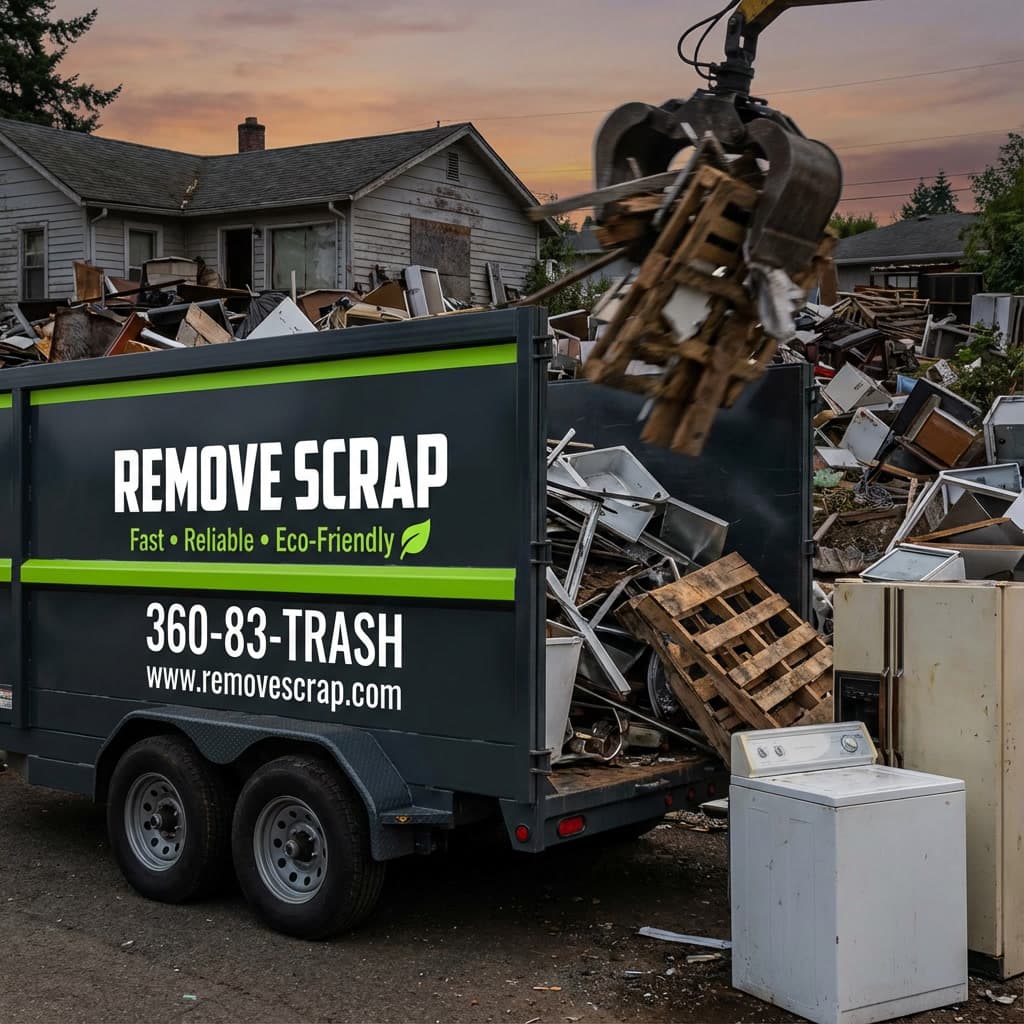
Every September, the Pacific Northwest sends the same invoice: leaves by the cubic yard, storm-dropped branches, the vegetable garden's remains, and the patio set that didn't survive its third summer. Here's how yard debris actually works in the Portland–Vancouver metro — what your curbside bin handles, what it doesn't, and where a hauler honestly fits.
Your Curbside Compost Bin Handles More Than You Think
Both Portland's and Clark County's residential collection programs take leaves, small prunings, and garden waste in the yard debris cart. If your fall cleanup is leaves and clippings, the cheapest route is patience: fill the cart every cycle and let the program do its job. Extra-leaf season tricks: many haulers sell extra yard debris bags or stickers, and Portland has historically run leaf-day sweeps in high-canopy neighborhoods — check your service district's current program.
What the Bin Won't Take (This Is Where Piles Come From)
- Branches over the diameter/length limit — storm limbs and whole shrub removals exceed cart specs fast
- Sod, dirt, rock, gravel — collection programs are organics-only; soil is "fill," a different waste stream entirely
- Treated or painted wood — old fence boards and deck lumber are construction debris, not compost
- The non-organic casualties — rusted patio furniture, dead grills, cracked planters, hoses, the shade canopy that folded in a June gust
That second list is why every fall we haul trailer loads that started as "just a little yard cleanup."
The Honest Options for the Big Pile
1. Haul it yourself. Metro (Portland side) and Clark County transfer stations accept yard debris, often at a lower rate than mixed garbage — separated organic loads are cheaper to dump. You need a truck, a tarp (loads must be covered on both states' highways — it's the law and it's ticketed), and a Saturday.
2. Chip it. Big branch volume but nothing else? Tree services chip on-site, and chips make free mulch. Only pencils out with real branch volume.
3. One hauler trip for the mixed pile. This is where we fit honestly: the fall pile is rarely just organics. It's branches PLUS the dead grill PLUS the broken patio set PLUS the fence section that came down. Mixed loads can't ride the compost stream anyway — and the metal in that pile (grill, furniture frames, tomato cages) is scrap value that works in your favor with us. Our $175 trip charge covers the small mixed pile; a full trailer of fall accumulation runs $250–$300.
Timing Advice Nobody Gives
Book fall cleanups before the first real storm, not after. Post-storm weeks are the busiest in this industry — everyone's fence panel and maple limb comes down the same night, and schedules fill. September's calm weekends are the cheap, easy slot. Also: don't stack the pile against the fence line for a month — wet Pacific Northwest debris piles kill the grass under them and become a slug hotel remarkably fast.
FAQ
Does junk removal take yard debris?
Yes — branches, brush, and mixed yard waste haul fine. Pure organics are cheaper through your curbside cart or a transfer station's yard debris rate; mixed piles (organics + broken outdoor stuff) are where a hauler makes sense.
What do I do with old patio furniture and a dead grill?
Metal furniture and grills carry scrap value — curb them with a FREE sign for scrappers, or include them in a haul where the metal offsets your price. That's our model.
Can I burn yard debris in Clark County?
Outdoor burning is heavily restricted and often banned outright depending on season, location, and air quality — check current Clark County and SWCAA rules before striking a match. The transfer station is always legal.
Fall pile bigger than the bin? One trip, legal disposal, and the metal in the pile works in your favor. Free quotes at removescrap.com.
Need Junk Removed?
Same-day service in Portland & Vancouver metro. Free quotes, no obligation.
Call (360) 83-TRASH